
How Technical Websites Build Trust Before the Quote
When a buyer cannot confirm connector gender, cable-length tolerance, pinout, or delivery lead time, they often leave without getting in touch. The issue is rarely persuasion alone. More often, the site lacks the evidence they need: specifications are vague, company details are difficult to verify, or the route from a technical requirement to a quote is unclear.
For infrastructure suppliers and technical service firms, trust comes from details a visitor can check. Accurate specifications, traceable processes, clear limitations, and a practical compatibility check reduce uncertainty before an order is placed.
Make company identity easy to verify
A visitor should be able to identify the business behind a site without digging through menus or submitting a form. Where appropriate, show the legal business name, a physical operating or service location, working contact channels, and a consistent company identity throughout the site. A contact page containing only a generic form leaves too many questions unanswered for engineers and procurement teams.
Useful details include:
- a monitored business email address using the company domain;
- a telephone number, with business hours and time zone where support is not continuous;
- an address or a clear statement of the regions served;
- company registration, tax, or certification information when relevant and safe to publish;
- named teams or functions, such as technical sales, engineering, returns, or order support.
Consistency matters as much as the individual details. If the logo, business name, email domain, and invoice identity differ, explain the reason. A brand operated by a parent company, for example, can state that relationship plainly. Without an explanation, a legitimate arrangement may look like an error.
Replace broad claims with verifiable technical information
Terms such as “high quality,” “premium,” and “compatible” do not answer the questions that determine whether a cable assembly or adapter will work. Technical buyers need details they can compare with their own equipment documentation.
Each product or service page should state the relevant facts rather than relying on marketing labels. A SAS, SATA, Fibre Channel, InfiniBand, Ethernet, or optical listing may need to specify connector type, form factor, polarity or keying where applicable, conductor or fiber type, supported protocol generation, shielding, length, bend limits, environmental rating, and tested configuration. Compatibility claims should define their scope: physical fit, electrical interoperability, supported data rate, or validated operation with a named host, switch, transceiver, or storage platform.
Separate facts, options, and assumptions
Confidence drops when a configurable product page presents optional features as standard. Organize specifications so buyers can quickly see the difference:
- Standard configuration: the parts, cable type, and dimensions included by default.
- Selectable options: connector orientations, lengths, labels, jackets, boots, shielding, and test requirements.
- Constraints: minimum bend radius, maximum practical assembly length, power limits, lane-mapping restrictions, or unavailable combinations.
- Verification status: manufacturer data, in-house continuity testing, insertion-loss measurements, protocol testing, or unverified compatibility.
Do not imply a certification that has not been earned. If a product is built to a specification but has not received independent certification, say so directly. A limited but accurate statement is more useful than a claim that engineering or procurement later disproves.
Show how compatibility is checked
“Contact us to confirm compatibility” can be helpful, but it should not be the only guidance available. Explain what information the team needs to assess a request. This helps buyers prepare and shows that the review is based on engineering inputs rather than guesswork.
For a custom or replacement cable, a compatibility checklist may request:
- equipment manufacturer and exact model number at both ends;
- interface standard and required data rate;
- connector part numbers or clear photographs of connector faces and keying;
- required cable length, routing path, and acceptable tolerance;
- environmental conditions, including rack, outdoor, vibration, or high-flex use;
- whether the request replaces a known working part, including its part number and length.
Publishing this list reduces back-and-forth and avoids a common source of frustration: a quote that changes later because the original request omitted a critical detail. It also exposes limitations early. A passive direct-attach cable, for instance, may have practical distance limits at a given data rate, so an active cable or optical solution may be required beyond them.
A service page should describe the request, review, quotation, build, test, and dispatch stages in plain language. A guide to writing a clear custom cable assembly service page can help structure those operational details without turning the page into a sales script.
Use evidence that has context
Testimonials, project examples, and test records can support credibility only when visitors understand what they demonstrate. An anonymous comment such as “excellent service” offers little to a network engineer selecting a replacement assembly. A short case example is more useful when it identifies the technical problem, delivered configuration, validation method, and relevant boundary conditions.
Protect confidential customer information, but do not invent precision. If a project cannot name the customer or disclose the topology, present it as an anonymized example and state what has been withheld. Do not use customer logos without permission or present a one-off laboratory result as a guarantee for every deployment.
Publish test information carefully
Test claims carry particular weight in cable and network infrastructure, which makes overstatement easy. A product page can state the test performed, the category of test equipment used, the acceptance criteria, and whether a report is supplied with the order. The wording should reflect the actual process.
| Claim | What it should mean on the page |
|---|---|
| Continuity tested | Each required conductor path was checked for opens, shorts, and correct pin mapping. |
| Optically tested | State whether inspection, insertion-loss measurement, return-loss measurement, or OTDR testing was performed. |
| Protocol tested | Name the interface generation, host or switch class, transceiver or adapter type, and test conditions where possible. |
| 100% tested | Define whether this applies to every unit and which tests are included; do not leave the term undefined. |
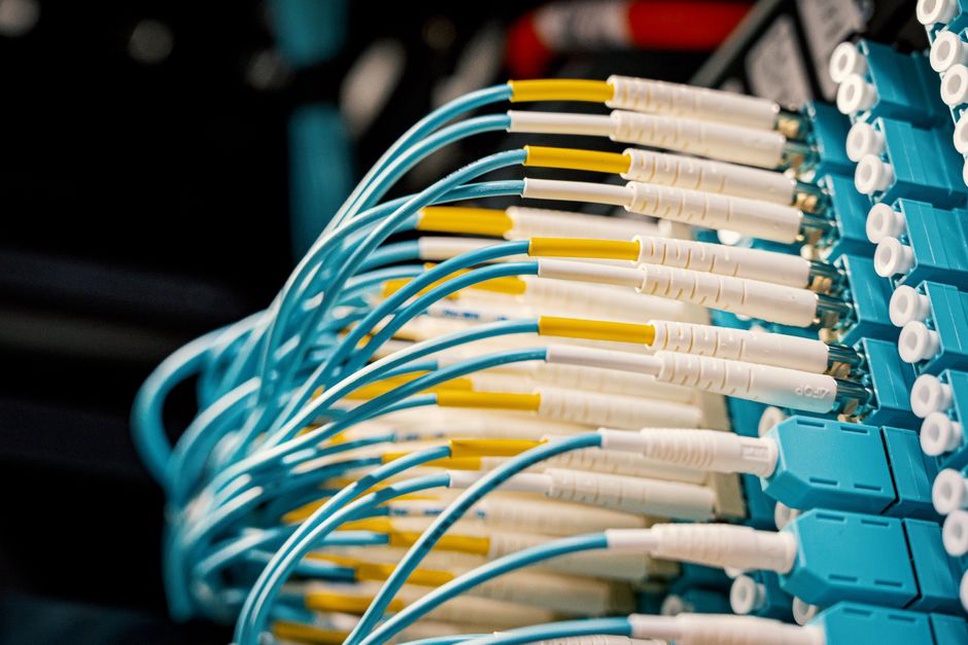
Photos of actual labels, connector inspection, calibrated test equipment, or a sample test report can help when they represent the normal process. Generic server-room imagery may support the page design, but it cannot serve as evidence of a specific capability.
Make commercial terms visible before the final form
A technical purchase may involve custom work, non-returnable configurations, lead times affected by component availability, and shipping constraints. Revealing these conditions only at checkout or after a quote creates unnecessary friction. Terms do not need to sound harsh; they need to explain what happens in routine and exceptional cases.
Place concise information close to the relevant decision point:
- how quoted pricing is calculated for custom assemblies;
- what starts the production lead time: inquiry, purchase order, payment, engineering approval, or receipt of components;
- which custom products can be changed or cancelled, and at what production stage;
- return and warranty conditions, including exclusions caused by incorrect specification or installation damage;
- shipping methods, tracking availability, export restrictions, and responsibility for duties where applicable.
Use dates or ranges only when the business can support them. “Ships in 24 hours” should apply only to stock that is allocated and ready for dispatch, not to parts merely expected from a distributor.
Remove basic usability failures
A technical site must work under ordinary professional conditions: on a phone in a data center, on a restricted corporate network, or in a browser with strict privacy settings. Broken forms, dead PDFs, unreadable tables, and slow category pages can make a capable supplier appear unreliable.
Test the website as a buyer would. Confirm that search returns exact part numbers, filters retain selected values, product images enlarge without obscuring critical labels, and downloadable documents match the current revision. Forms should confirm receipt, state the expected response window, and provide another contact method if submission fails.
Performance affects credibility as well. Heavy scripts, oversized images, and shifting page elements make product comparison harder and can interrupt form completion. Practical guidance on measuring LCP, INP, CLS, and correcting common performance problems is available in this guide to website performance testing and Core Web Vitals.

Protect data without creating unnecessary friction
Quote and support forms often collect names, work email addresses, equipment details, drawings, and sometimes network diagrams. State what is collected, why it is needed, how long it is retained, and which team can access it. Link to a privacy notice from every form, and avoid asking for information unrelated to the requested service.
Security indicators should be genuine rather than decorative. Use HTTPS across the site, keep software and plugins up to date, restrict administrative access, and use reputable payment processing where payments are accepted. Do not display unsupported badges claiming compliance, encryption, or security audits. A false security badge creates more risk than having no badge at all.
Explain email and file-sharing practices
Technical customers may send drawings, bills of materials, or configuration exports. Describe accepted file formats and maximum attachment sizes. If files must be sent through a secure upload portal or encrypted channel, provide clear instructions. For email-based quotation workflows, publish the company domain and explain that changes to payment details will be confirmed through a known contact method. This helps reduce exposure to invoice-redirection fraud.
Keep information current and correct errors visibly
Outdated specifications quietly undermine trust. An obsolete part number, discontinued connector family, or image showing different keying can result in an unsuitable order. Assign ownership for key pages and review them after supplier changes, product revisions, process updates, or policy changes.
Revision dates are useful when they reflect an actual content review rather than an automatically refreshed timestamp. For documents with meaningful engineering changes, include a revision identifier and a brief change note, such as: “Rev. B: corrected QSFP-to-SFP lane mapping diagram; updated maximum passive length.” When a customer reports an error, correct the source page and any downloadable datasheet rather than responding only by email.
A practical pre-publication checklist can prevent many of these problems. Verify the title and part number, connector photos, dimensional drawing, interface standard, compatibility scope, test claim, lead-time statement, and contact route on every technical page. Small inconsistencies are often what cause a buyer to question the rest of the specification.

